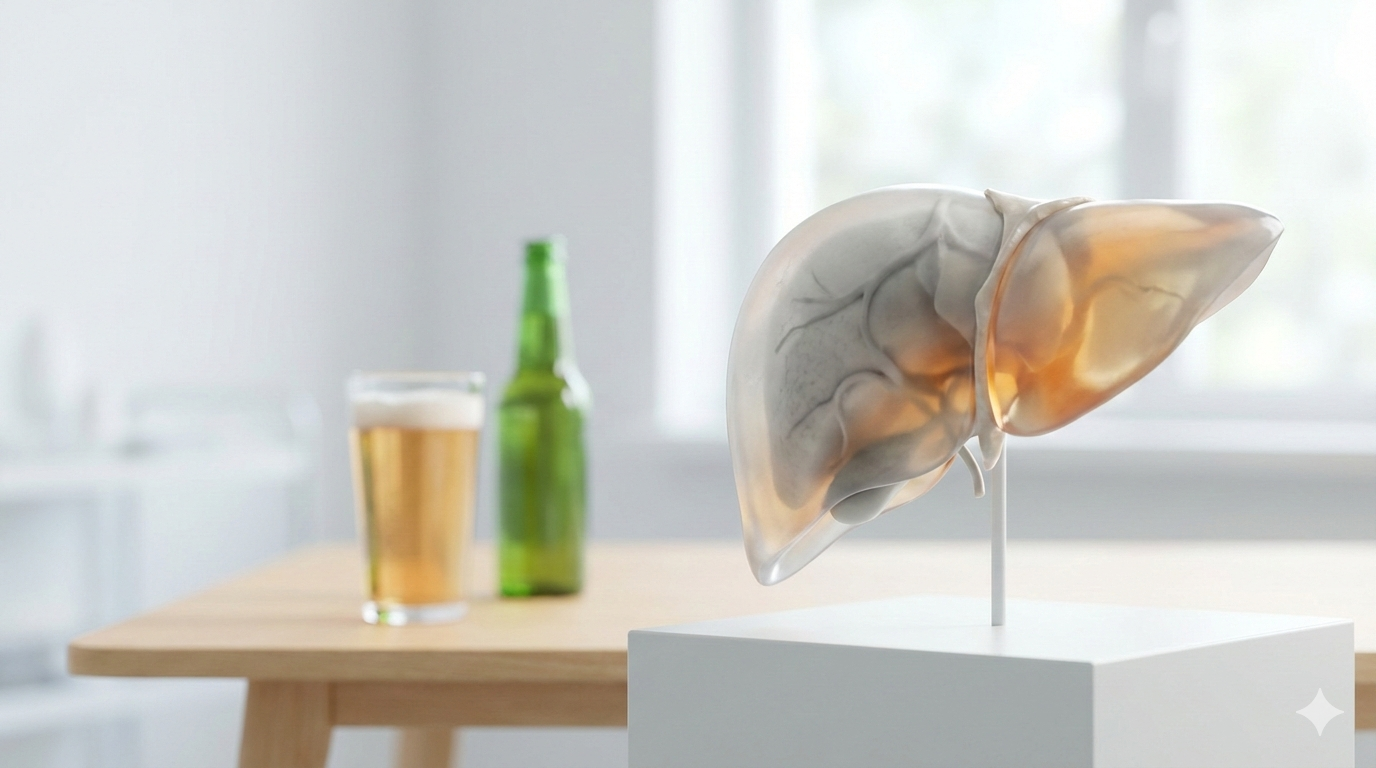

Alcohol Metabolism and Your Liver
 Let's start with why your liver is impacted by what you eat and drink. University of Michigan Medicine calls the liver "the workhouse of the digestive system," because it performs 500 different functions in the human body. One of its most crucial jobs is to process what we bring into our bodies, storing good nutrients and filtering out toxins. This is where the liver's relationship with alcohol comes in.
Alcohol metabolism is the process the liver uses to break apart the alcohol molecule and convert it into something the body can eliminate. Through this process, a chemical called acetaldehyde is created. This byproduct, along with the dehydration alcohol causes, is largely responsible for how someone feels during a hangover.
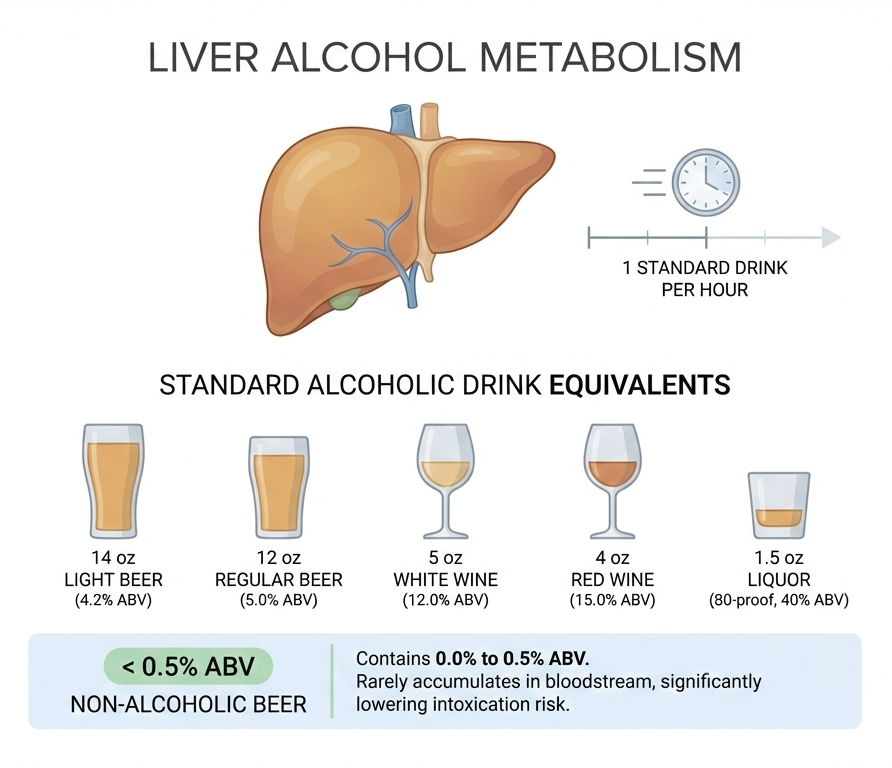
A healthy liver can process about one standard drink per hour. State Alcoholic Beverage Control departments define a standard drink as follows:
Let's start with why your liver is impacted by what you eat and drink. University of Michigan Medicine calls the liver "the workhouse of the digestive system," because it performs 500 different functions in the human body. One of its most crucial jobs is to process what we bring into our bodies, storing good nutrients and filtering out toxins. This is where the liver's relationship with alcohol comes in.
Alcohol metabolism is the process the liver uses to break apart the alcohol molecule and convert it into something the body can eliminate. Through this process, a chemical called acetaldehyde is created. This byproduct, along with the dehydration alcohol causes, is largely responsible for how someone feels during a hangover.
A healthy liver can process about one standard drink per hour. State Alcoholic Beverage Control departments define a standard drink as follows:
- 14 oz of light beer (4.2% ABV)
- 12 oz of regular beer (5.0% ABV)
- 5 oz of white wine (12.0% ABV)
- 4 oz of red wine (15.0% ABV)
- 1.5 oz 80-proof alcohol (40.0% ABV)
Find NA Beer Near You
Real-time NA menus.


Does Your Liver Process Non-Alcoholic Beer?
Yes, your liver processes NA beer, just as it processes anything you drink and eat. But, in contrast to the potential overload alcohol puts on your liver, non-alcoholic beer barely gives this powerhouse organ any additional work to do. The trace amount of alcohol, up to 0.5% ABV, is easily handled during a healthy liver's standard processing. In fact, as part of a healthy lifestyle and diet, some studies have found that non-alcoholic beer is not only a neutral influence but may even positively affect gut bacteria without damaging the liver. That said, when choosing a non-alcoholic beer, pay attention to its sugar content.Why Sugar in NA Beer Matters for Liver Health
 With all the jobs your liver needs to do, from detoxification and vitamin storage to producing bile for the digestive system and removing bacteria from the bloodstream, excess dietary sugar causes it additional strain.
The sugars you consume also need to be processed through the liver. If you overindulge in sugar products regularly, the risk of Non-Alcoholic Fatty Liver Disease (NAFLD) increases.
With all the jobs your liver needs to do, from detoxification and vitamin storage to producing bile for the digestive system and removing bacteria from the bloodstream, excess dietary sugar causes it additional strain.
The sugars you consume also need to be processed through the liver. If you overindulge in sugar products regularly, the risk of Non-Alcoholic Fatty Liver Disease (NAFLD) increases.
Sugar-Sweetened Beverages
Fortunately, non-alcoholic beers have far less sugar than soft drinks. The U.S. Centers for Disease Control and Prevention (CDC) classifies soft drinks as sugar-sweetened beverages (SSBs), which also include fruit drinks and juices. SSBs are considered high-calorie, high-sugar drink options, at about 150 calories and up to 40 grams of sugar per 12-oz serving.Sugar and Non-Alcoholic Beer
Most non-alcoholic beer has nowhere near the sugar content of a sugar-sweetened beverage, but it can have more sugar than alcoholic beer. One reason for this is the way non-alcoholic beer is made. There are a few methods for brewing NA beer. In traditional brewing, during fermentation, brewer's yeast converts sugar into alcohol. When non-alcoholic beer brewers stop fermentation early, this not only limits how much alcohol is produced, but also leaves more sugar behind in the final beer. Sometimes, sugar is even added to enhance flavor.Why Removing Alcohol Doesn't Remove Sugar
Not all non-alcoholic beers are produced by shortened fermentation. Some brewers ferment their beer and then remove the alcohol (dealcoholization). Two of the most common methods for dealcoholization are:- Vacuum Distillation: After beer is fully fermented, vacuum distillation evaporates the alcohol without exposing the beer to taste-compromising high heat.
- Reverse Osmosis: Beer is filtered through a membrane that separates components by size. Alcohol and water flow through, and flavor compounds are captured. Alcohol is removed from the water, then the retained flavor compounds are reunited with the filtered water.
Does Alcohol-Free Beer Also Have Zero Sugar?
No, the correlation between ABV and sugar content is not a straight calculation, even though both depend on how a beer is processed. There are three main types of non-alcoholic beer:- Non-alcoholic: Less than 0.05% ABV
- Alcohol-free: Usually 0.0% ABV, but this terminology is not always consistent.
- 0.0% ABV: Truly alcohol-free. All detectable alcohol has been removed.
ABV and Sugar Content of Non-Alcoholic Beer (12 oz serving)
| Beer | ABV per serving | Sugar per serving |
|---|---|---|
| Go Brewing Sunshine State Tropical IPA | 0.3% | 16.7 g |
| Heineken 0.0 | 0.0% | 4 g |
| Al's Classic Lager | 0.5% | 0 g |
| Clausthaler Grapefruit | 0.5% | 4.7 g |
| Stella Artois Liberte | 0.0% | 0 g |
| Guinness 0 | 0.0% | 3.1 g |
| Brooklyn Special Effects IPA | 0.5% | 11.88 g |
Who Should Be Cautious With Non-Alcoholic Beer?
 For most people, non-alcoholic beer is a fairly healthy alternative to alcoholic beer. Reasons for this include the fact that, in almost all cases, NA beer does not cause intoxication, which, in and of itself, provides benefits like safer driving, unimpaired thinking, and guilt-free unwinding.
And yet, those with certain health conditions or who are abstaining from alcohol completely should discuss whether non-alcoholic beer is a safe choice for them. Some examples include:
For most people, non-alcoholic beer is a fairly healthy alternative to alcoholic beer. Reasons for this include the fact that, in almost all cases, NA beer does not cause intoxication, which, in and of itself, provides benefits like safer driving, unimpaired thinking, and guilt-free unwinding.
And yet, those with certain health conditions or who are abstaining from alcohol completely should discuss whether non-alcoholic beer is a safe choice for them. Some examples include:
- Those with a liver-related illness, such as cirrhosis or fatty liver disease.
- Pregnant or nursing mothers
- People taking certain medications
Find NA Beer Near You
Real-time NA menus.
Frequently Asked Questions About NA Beer and Health
Can You Drink Non-Alcoholic Beer When Pregnant?
Drinking NA beer during pregnancy is definitely a discussion to have with your doctor. While non-alcoholic beer has a barely detectable amount of alcohol (0.0% to 0.5% alcohol by volume), leading health authorities still promote abstinence from alcohol as the safest practice during pregnancy. The Centers for Disease Control and Prevention (CDC) advises that there is no known safe amount of alcohol during pregnancy when it comes to preventing fetal alcohol spectrum disorders (FASDs). If your doctor gives you the OK or when you are ready to enjoy a non-alcoholic beverage as a new parent, use the NA Beer Finder to select the perfect NA beer or mocktail near you.Does Non-Alcoholic Beer Harm Your Heart?
This answer depends entirely on an individual's health. Alcoholic beer has long been studied for its positive effects on the heart, when consumed in moderation, by increasing the "good cholesterol" (HDL) in the bloodstream. And yet, the dangers of alcohol consumption still exist, whether it's because someone is drinking in excess or because they have a condition that makes even moderate consumption dangerous. Recent studies have emerged to gauge whether non-alcoholic beer has similar positive cardiovascular effects. Preliminary results indicate that NA beers may help increase blood flow and keep blood vessels healthy, both good things for heart health. Still, to learn whether non-alcoholic beer is a good choice for your heart, consult your doctor.Does Non-Alcoholic Beer Have More Calories?
No, NA beer is typically lower in calories because it has lower alcohol by volume (ABV). When the alcohol is removed, a lot of calories also disappear. Alcohol has about 7 calories per gram. A standard, 12-oz alcoholic beer (5.0% ABV) has about 14 grams of alcohol, or about 98 calories from alcohol. A standard, 12-oz NA beer (0.5% ABV) has about 1.5 grams of alcohol, or about 10.5 calories from alcohol. While both non-alcoholic and alcoholic beers get their calories from other sources, such as carbohydrates, protein, sodium, and sugar, an NA beer will typically have fewer calories than a regular beer, unless additional sugars or ingredients boost the total calories. Per 12-oz serving, a typical NA beer is about 50-100 calories, while a regular beer averages 150 calories.Can Non-Alcoholic Beer Make You Gain Weight?
Consumed in moderation, non-alcoholic beer alone will not make you gain weight. Compared to alcoholic beer, it is generally a lower-calorie option. While all beer could be considered "empty" calories, the trace amount of alcohol in NA beer doesn't cause the alcohol-related weight issues of other adult beverages, including the poor nutritional choices one might make while their judgment is impaired by alcohol consumption. When combined with a good diet, a healthy lifestyle, and regular exercise, moderate consumption of non-alcoholic drinks is unlikely to cause weight gain.Sources
- University of Michigan Medicine: https://www.michiganmedicine.org/health-lab/what-does-liver-do-and-how-do-i-keep-mine-healthy
- National Institute on Alcohol Abuse and Alcoholism: https://www.niaaa.nih.gov/publications/alcohol-metabolism
- EPA.gov (Acetaldehyde definition): https://www.epa.gov/sites/default/files/2016-09/documents/acetaldehyde.pdf
- McGill University: https://www.mcgill.ca/oss/article/health/curing-hangover
- Cleveland Clinic: https://my.clevelandclinic.org/health/diagnostics/22689-blood-alcohol-content-bac
- National Library of Medicine: https://pmc.ncbi.nlm.nih.gov/articles/PMC7772724/
- Columbia University Irving Medical Center: https://columbiasurgery.org/liver/liver-and-its-functions
- U.S. Centers for Disease Control and Prevention (CDC): https://www.cdc.gov/nutrition/php/data-research/sugar-sweetened-beverages.html
- America's Test Kitchen: https://www.americastestkitchen.com/articles/7926-how-is-non-alcoholic-beer-made-ask-paul
- Wine Enthusiast: https://www.wineenthusiast.com/culture/beer/beer-flavor-science/
- CDC: https://www.cdc.gov/alcohol-pregnancy/about/index.html
- NutritionHeart.com (ABV to Alcohol grams calculator): https://www.nutritionheart.com/alcohol-drinks-grams-of-alcohol/
- Stony Brook University, Renaissance School of Medicine: https://renaissance.stonybrookmedicine.edu/surgery/blog/faqs-about-alcohol-consumption-and-weight-gain