

From Chronic Stress to an Evening Ritual
After a long day of school runs, difficult conversations, and being constantly "on," the moment the kids are finally in bed brings a wave of relief. For many, this is the cue to pour a glass of wine or open a beer. It’s less about heavy drinking and more about a ritual, a signal to the brain that it’s time to shift from "parent on duty" to personal time. This habit often becomes a primary coping mechanism for dealing with sustained stress. This pattern is especially common for parents navigating the complexities of the school system. Advocating for a child with an IEP isn't a single event. It involves days of preparation, the emotional labor of meetings, and constant follow-up. This creates a chronic, low-grade hum of anxiety that's incredibly difficult to switch off at night, making that evening drink feel like a necessity.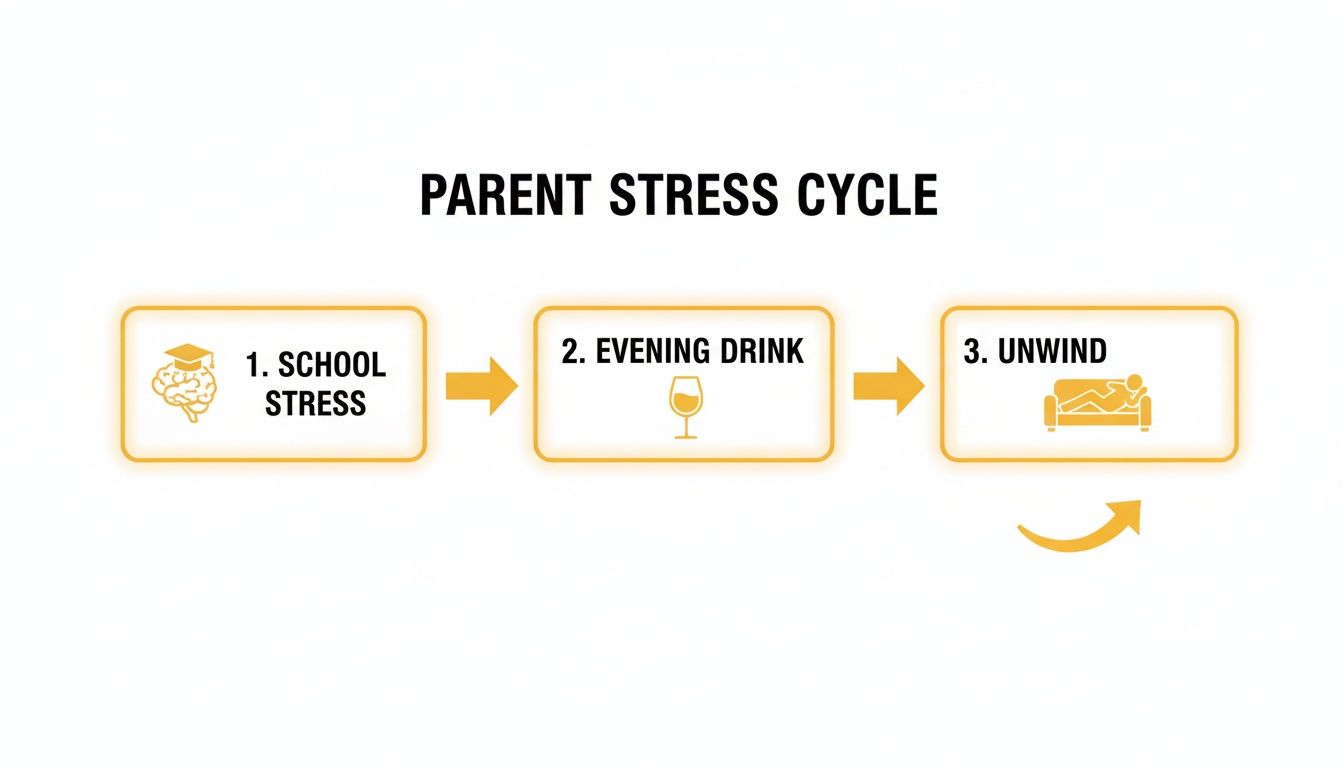
Why School Stress Feels Heavier for More Families
School-related stress has increased for many parents, not just because school is harder, but because more children now need ongoing support. Over the past decade, schools have seen a rise in students requiring formal accommodations and services.
Common reasons parents are under more pressure today include:
- Rising diagnoses of ADHD, which often require classroom accommodations and frequent communication with teachers
- Increased awareness and identification of autism spectrum disorder, leading to more evaluations and long-term support plans
- Behavioral and emotional disabilities that can affect learning, classroom dynamics, and social development
- More students on IEPs and 504 plans, increasing the number of meetings, documents, and follow-ups parents must manage
- Longer timelines for services, meaning stress persists across multiple school years, not just one semester
For many parents, this creates a constant background hum of responsibility.
What makes this stress different from typical parenting stress:
- It is ongoing, not seasonal
- It involves high-stakes decisions about a child’s future
- Progress can feel slow or unclear
- Parents are often expected to become experts in an unfamiliar system
By the time evenings arrive, the mental load does not simply turn off. Emails go unanswered. Meetings need follow-up. Plans for the next step start forming late at night. That sustained pressure helps explain why many parents look for ways to decompress, even if the coping habits they rely on are not always ideal.
The Downstream Effects of Common Coping Habits
 What begins as a simple way to take the edge off can quietly morph into a frustrating cycle. While an alcoholic drink provides immediate relaxation, it often disrupts sleep quality later in the night. The result is waking up groggy, with less emotional regulation and a diminished capacity to handle the morning school rush or a tense conference call with a teacher.
The practical, downstream effects on next-day functioning are significant:
What begins as a simple way to take the edge off can quietly morph into a frustrating cycle. While an alcoholic drink provides immediate relaxation, it often disrupts sleep quality later in the night. The result is waking up groggy, with less emotional regulation and a diminished capacity to handle the morning school rush or a tense conference call with a teacher.
The practical, downstream effects on next-day functioning are significant:
- Reduced Patience: Poor sleep can shorten a parent's fuse, making it harder to handle a toddler's tantrum or a teenager's defiance.
- Mental Fog: Reviewing a dense school report or remembering key questions for a meeting feels much more challenging without being mentally sharp.
- Lower Resilience: Facing another day of advocacy feels exponentially harder when you're already running on empty.
Find NA Drinks Near You
Real-time NA menus.


Practical Alternatives for Better Next-Day Functioning
Parents are discovering that a well-crafted non-alcoholic beer can provide the same relaxing ritual. The cold can, the familiar taste, and the mental break are all there, but without negatively impacting their performance the next day. This approach is about harm reduction, not necessarily total abstinence. It preserves the psychological cue to unwind while eliminating the elements that disrupt sleep and impair emotional regulation. And if you're wondering about the alcohol content, it’s worth knowing the facts about whether you can get drunk on non-alcoholic beer. The non-alcoholic beverage market has grown immensely, moving far beyond the watery, bland options of the past. Today's craft breweries produce complex, flavorful NA beers that rival their alcoholic counterparts. This boom, detailed in reports on why non-alcoholic beer is booming in 2025, is driven by consumers who want sophisticated drink options that align with their wellness goals.Comparing Alcohol vs. Non-Alcoholic Drinks for Stress Management
This table illustrates the practical differences in how alcoholic and non-alcoholic drinks impact key areas of a parent's life when used for evening relaxation.| Factor | Traditional Alcoholic Drink | Non-Alcoholic Alternative |
|---|---|---|
| Sleep Quality | Disrupts REM sleep, leading to fatigue and grogginess. | No impact on sleep architecture; allows for restorative rest. |
| Next-Day Mood | Can increase irritability and anxiety due to poor sleep. | Promotes a stable mood and emotional regulation. |
| Cognitive Function | May cause mental fog, making complex tasks harder. | Maintains mental clarity for morning responsibilities. |
| Parenting Resilience | Depletes emotional reserves, shortening your fuse. | Preserves energy to handle challenges with patience. |
| Habit Formation | Can create a cycle of dependency for stress relief. | Offers a healthy ritual without the negative feedback loop. |