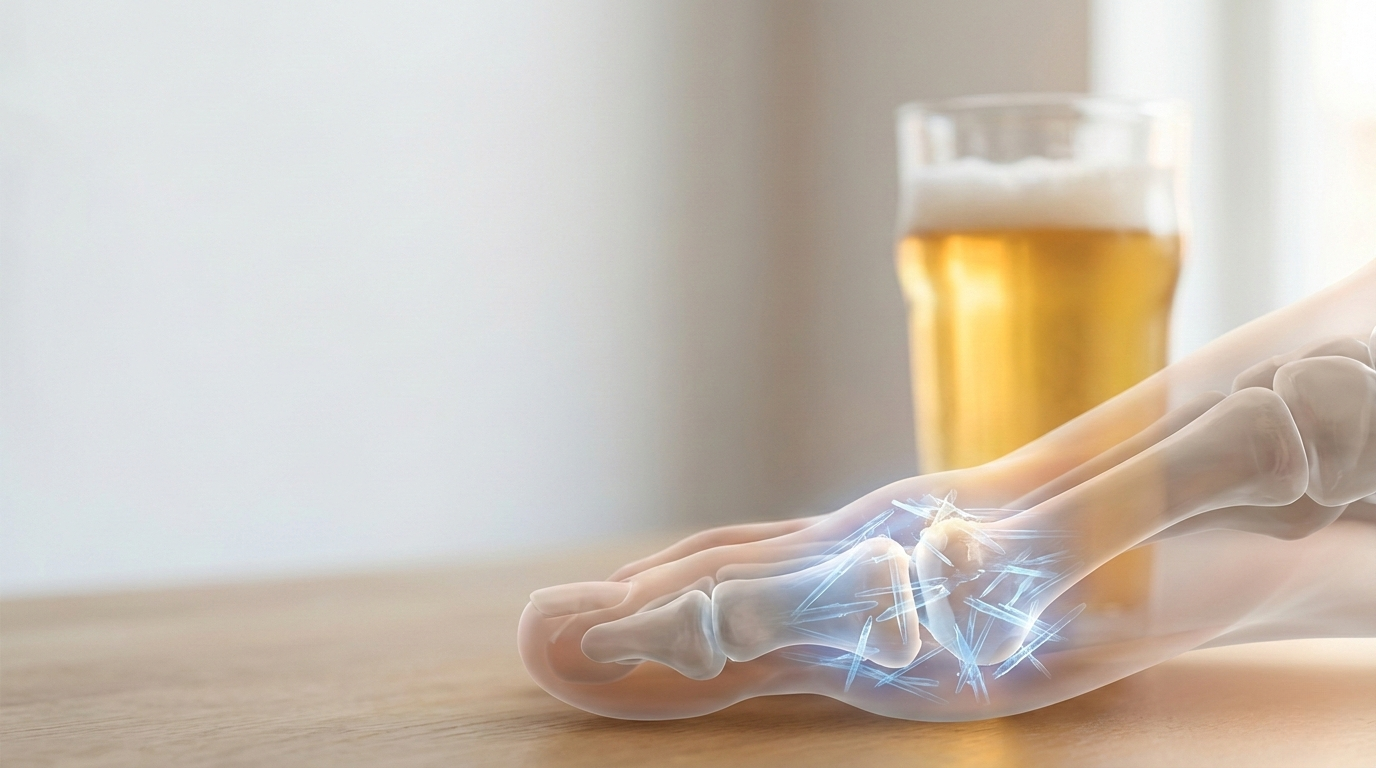

For people with gout, non-alcoholic beer is often a better choice than regular beer, but it is not without risk. Non-alcoholic beers have fewer purines, the organic compounds that trigger gout flare-ups, a painful form of inflammatory arthritis. Gout is caused by excess uric acid, a byproduct that builds up when the body breaks down purine-rich foods and beverages. According to the Arthritis Foundation, regular beer raises uric acid levels by 6.5%, while non-alcoholic beer raises it 4.4%, or 32% less. But, as Harvard Health points out, everybody processes purine differently. Non-alcoholic beer has purine and does raise uric acid levels, so always consult your doctor about the best option for your body. If you get the green light to enjoy non-alcoholic beer in moderation, the key is understanding your personal triggers, monitoring your intake, and knowing which non-alcoholic beers are lowest in purine.
What Is Gout and What Causes It?
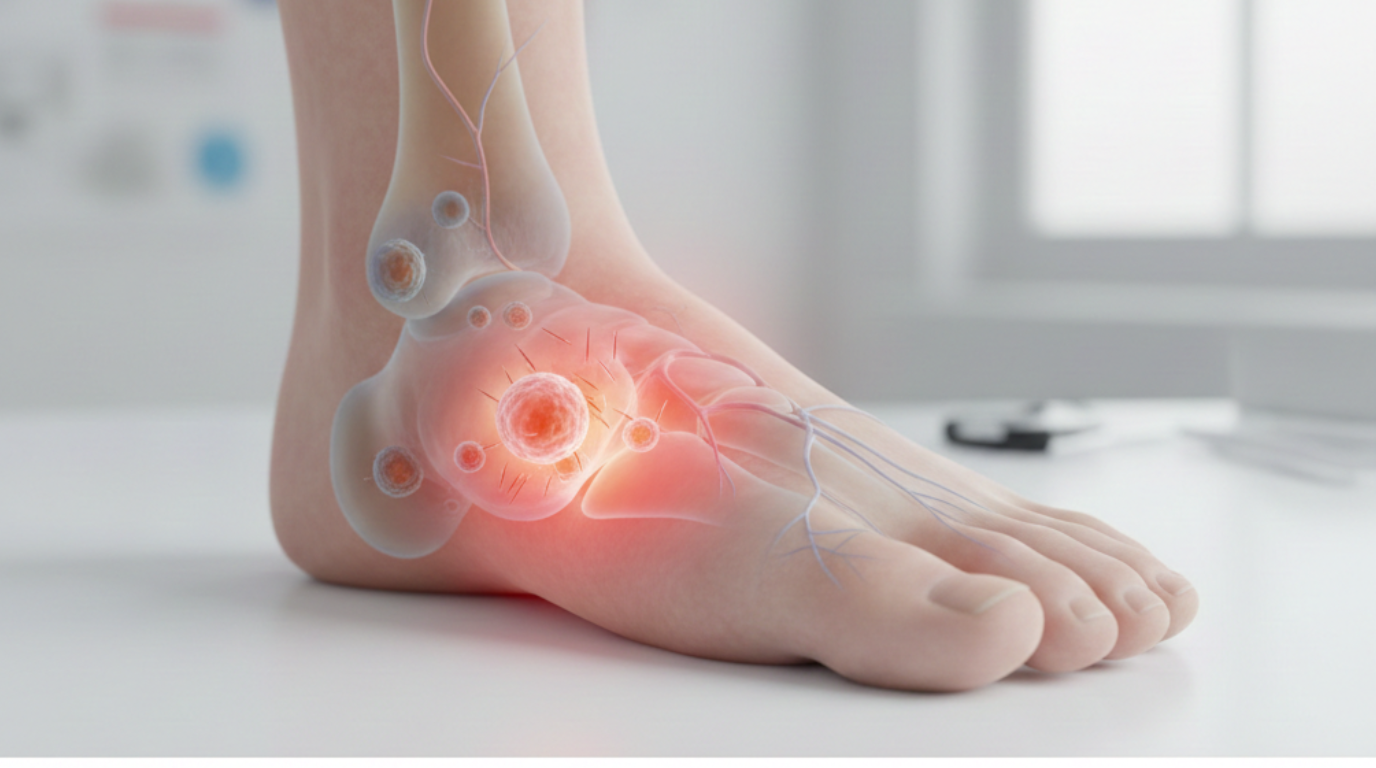
In the U.S., more than 9 million adults have gout, a form of arthritis that affects the joints and is caused by high levels of uric acid in the blood. You may have heard of someone complaining of excruciating pain in a very swollen big toe during a gout flare-up. This is a common symptom. But gout isn’t just a toe issue.
The Link Between Purine, Uric Acid and Gout
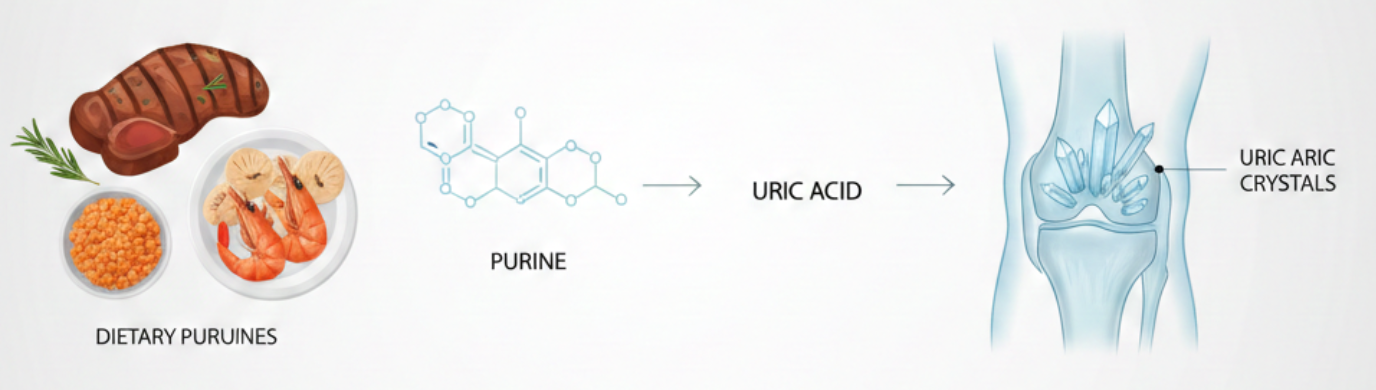
It’s not just a toe issue, and it’s not all that easy to eliminate the purine that causes it. The tricky part is that purine is everywhere, occurring naturally in our bodies and in the food we eat. It’s in everything from red meat and seafood to sugary foods and alcohol. As the body breaks down purine in food and beverages, uric acid is formed as a waste product. At normal amounts, uric acid is excreted in urine. When you eat too many purine-rich foods, your body can’t flush out the uric acid as quickly as it builds up. When it builds up in your blood to excess, the condition is called hyperuricemia. Not all cases of hyperuricemia develop into gout, but with over 9 million cases in the U.S., it’s not uncommon. When levels get high enough, a very painful arthritic condition occurs as excess uric acid forms needle-like crystals that cluster in and around joints. Typically, gout begins in the big toe, and can spread upward to the ankles, knees, elbows and other joints. The good news is that gout is very treatable. With the right treatment and dietary adjustments, most attacks ease up within a week or two and get less painful over time.
What to Eat (and Avoid) With Gout
Since purine is present in the foods we eat, diet adjustments help manage it. Health professionals, including the USDA, Mayo Clinic, and the Gout Education Society, recommend a low-purine diet to help prevent gout flare-ups. Here’s a look at the dos and don’ts of a gout diet.
Low Purine Foods and Beverages | High-Purine Foods and Beverages |
|---|---|
|
|
How Is Regular Beer Linked to Gout?
You’ve probably heard that regular beer is a hard “no” during a gout attack. But why is that? Research has linked alcohol to gout attacks because alcohol increases uric acid production and reduces kidney function. On top of that, many alcoholic beverages contain purine, which the body converts into uric acid. The higher the purine level, the more uric acid that builds up in the body. With an alcohol by volume (ABV) of 5% to 10%, regular beer already contributes to uric acid build-up. But alcoholic beer’s connection to gout doesn’t stop there. The way beer is made makes regular beer climb higher on the high-purine-foods list. Malted barley and brewer’s yeast, plus the fermentation process itself, contribute to regular beer’s high purine levels. Malted barley has a high purine content. Brewer’s yeast and the fermentation process increase the purine level in the final beer, averaging 75 mg/L. High-purine foods are directly related to the build-up of uric acid, and high uric acid levels increase the likelihood of a gout attack. For this reason, the USDA and other experts cite regular beer as the alcoholic beverage with the highest correlation to risk of gout.
Real-time NA menus.Find NA Drinks Near You


Does Non-Alcoholic Beer Increase Uric Acid?
Non-alcoholic beer still contains purine, which increases uric acid. However, studies show it increases uric acid by about 32% less than regular beer, which is a big difference. How much any food or beverage affects uric acid levels largely depends on its purine content. Keep in mind that a low-purine diet, the type recommended for those with gout, is less than 400 mg per day. During a flare-up, a patient might be restricted to under 150 mg daily.
Purine Concentration | Purine per 12-oz serving | |
|---|---|---|
Regular alcoholic beer | 18 mg to 54 mg (average 27 mg) | |
Non-alcoholic beer | 3.6 mg to 36 mg (average 14 mg) |
With an average of 14 mg of purine per 12-oz serving, non-alcoholic beer is more likely to fit into a diet of 400 mg per day than a regular beer, but it is nearly 10% of the daily intake during more restrictive 150 mg diets. As far as kidney function goes, while alcoholic beverages reduce kidney function, at under 0.5% ABV, non-alcoholic beers do not have enough alcohol to slow down healthy kidneys.
Can You Drink NA Beer If You Have Gout?
Even though non-alcoholic beer has little to no alcohol, it is not a zero-purine or low-purine beverage. So, only you and your doctor can decide whether it is safe for you to drink. When you have gout or when you have been advised that your uric acid levels are high, discuss all aspects of your diet with a trusted medical professional. Alcoholic beer, on the other hand, is never recommended when you have high uric acid levels or are suffering a gout attack. When it’s time for you to safely enjoy a great-tasting non-alcoholic beer, check the NA Beer Finder for the best options near you.
Real-time NA menus.Find NA Drinks Near You
Is Anyone Brewing a Purine-Free Non-Alcoholic Beer?
They’re trying. Both regular and non-alcoholic brewers are interested in reducing purine content, experimenting with alternatives to barley malt, engineering new yeasts, and introducing enzymes into the brewing process. Until there is a selection of truly purine-free beers on the market, there are some traits that can help you find a lower-purine, non-alcoholic beer. Generally, lighter beers produced with less malt tend to have lower purine than very malty beers, as do alcohol-free (0.0% ABV) beers. For instance, a non-alcoholic pilsner, or a lager like Impossibrew’s Enhanced Lager, is likely to have lower purine content than an NA stout, but always check nutrition information to be sure. Since purine content isn’t required to be listed on beer labels (regular or non-alcoholic), you won’t often find it on the bottle. But smaller, specialty brewers may include this information, and many will be able to tell you if you reach out to the brewery or a specialty bottle shop. Use the NA Beer Finder to find a specialty non-alcoholic retailer near you.
Frequently Asked Questions
Can drinking NA beer trigger a gout flare-up?
Yes, non-alcoholic beer can trigger gout in some people. It has a lower purine content than regular beer, but people process and eliminate purine differently. During an intense gout flare-up, even the 3.6 mg to 36 mg of purine in a 12-oz bottle of non-alcoholic beer might be excessive. However, since NA beer has little to no alcohol, it doesn’t exacerbate a gout attack by impairing kidney function the way regular beer does. Whether NA beer will trigger an attack depends on your body and its sensitivity to purine. Have a discussion with your doctor.
How much NA beer can I drink with gout?
It depends on what your doctor advises. Depending on your uric acid level, your purine intake, and what triggers your attacks, your doctor may advise you not to drink any non-alcoholic beer until your flare-up subsides. If you are given the go-ahead to drink NA beer, enjoy it in moderation, keeping in mind that even alcohol-free beers contain purine.
Is non-alcoholic beer generally better for you?
In most cases, yes, non-alcoholic beer is better than regular beer for most healthy adults. With trace levels of alcohol by volume (0.0% to 0.5% ABV), NA beer is not intoxicating and doesn’t bring alcohol-related health issues. That being said, some NA beers do have trace levels of alcohol, which may not be safe for those who are completely eliminating it, including those who are pregnant, on a recovery journey, or in treatment for a health condition.
What are some alternatives to NA beer for people with gout?
There are plenty of beverages to enjoy during a gout flare-up, including coffee, tea, sparkling water, citrus drinks, pure cherry juice, lemonade and coconut water, to name a few. You can also make a refreshing mocktail with gout-friendly ingredients. Just be sure to stay away from sugary drinks, high-fructose corn syrup, and check with your doctor to confirm what’s right for you.
Sources
Arthritis Foundation: https://www.arthritis.org/health-wellness/healthy-living/nutrition/healthy-eating/gout-diet-dos-and-donts
Arthritis UK: https://www.arthritis-uk.org/news/2020/august/busting-the-myths-of-gout/
Centers for Disease Control and Prevention (CDC): https://www.cdc.gov/arthritis/gout/index.html
Cleveland Clinic: https://my.clevelandclinic.org/health/diseases/17808-hyperuricemia-high-uric-acid-level
Gout Education Society: https://gouteducation.org/uric-acid-level/
Mayo Clinic: https://www.mayoclinic.org/diseases-conditions/gout/symptoms-causes/syc-20372897
Multidisciplinary Digital Publishing Institute (MDPI): https://www.mdpi.com/2311-5637/11/4/193
National Institutes of Health (NIH): https://www.niams.nih.gov/health-topics/gout
ScienceDirect (chapter): https://www.sciencedirect.com/science/chapter/edited-volume/pii/B9780123738912000262
ScienceDirect (article): https://www.sciencedirect.com/science/article/abs/pii/S1567576923007890