

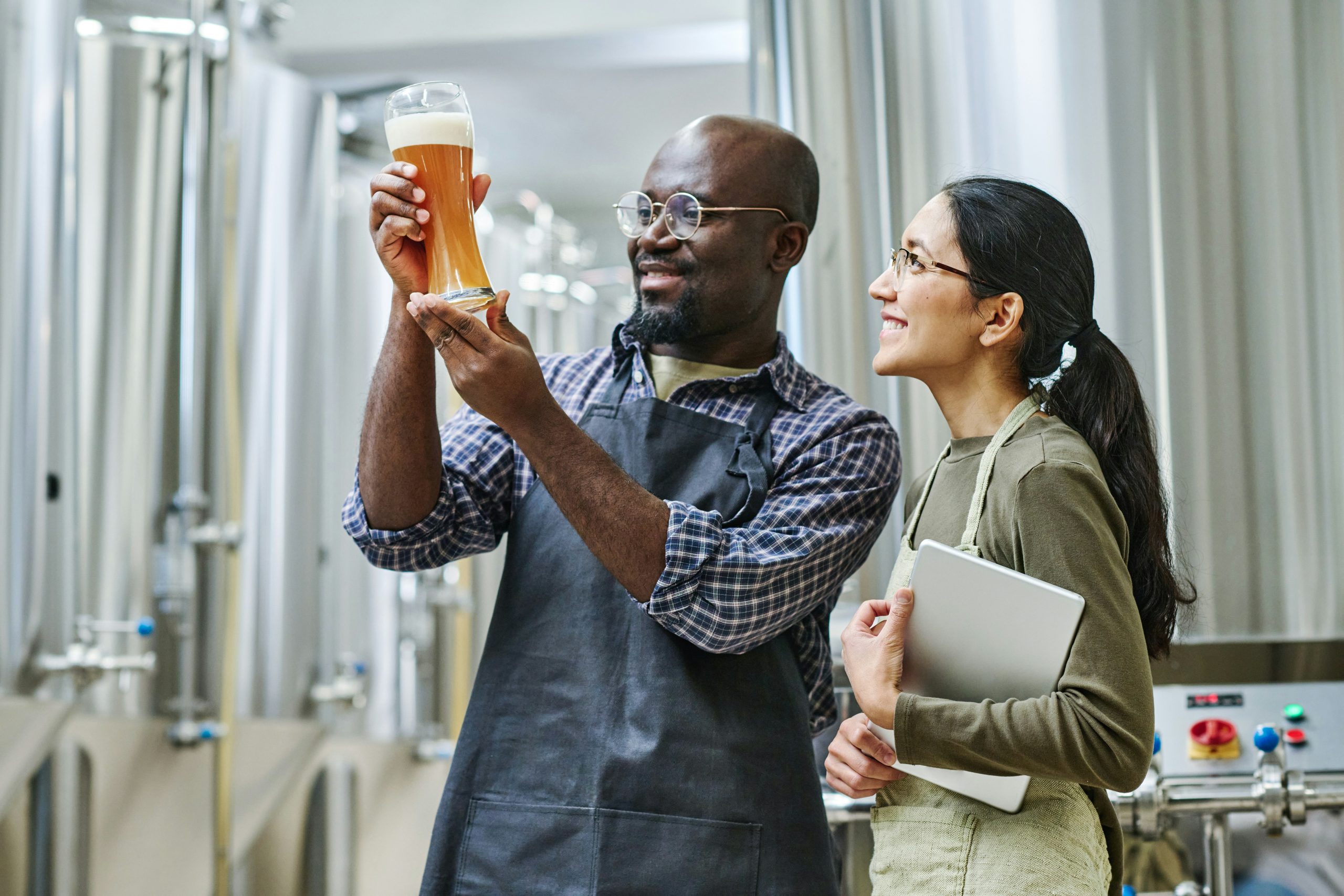
Non-alcoholic beer is made by suspending alcohol production during fermentation or removing alcohol after fermentation. Both methods deliberately control the beer's alcohol by volume (ABV) to ensure it meets the production and labeling standards for non-alcoholic beers: 0.0% to 0.5% ABV. Thanks to advances in NA beer brewing techniques and technologies, whether a brewer wants to reduce alcohol content or remove it completely, there are different ways to achieve the desired result. The outcome of today's refined methods is an impressive variety of high-quality, flavorful brews, which is reflected in the year-over-year growth of the non-alcoholic beer market.
How Alcohol Forms in Regular Beer
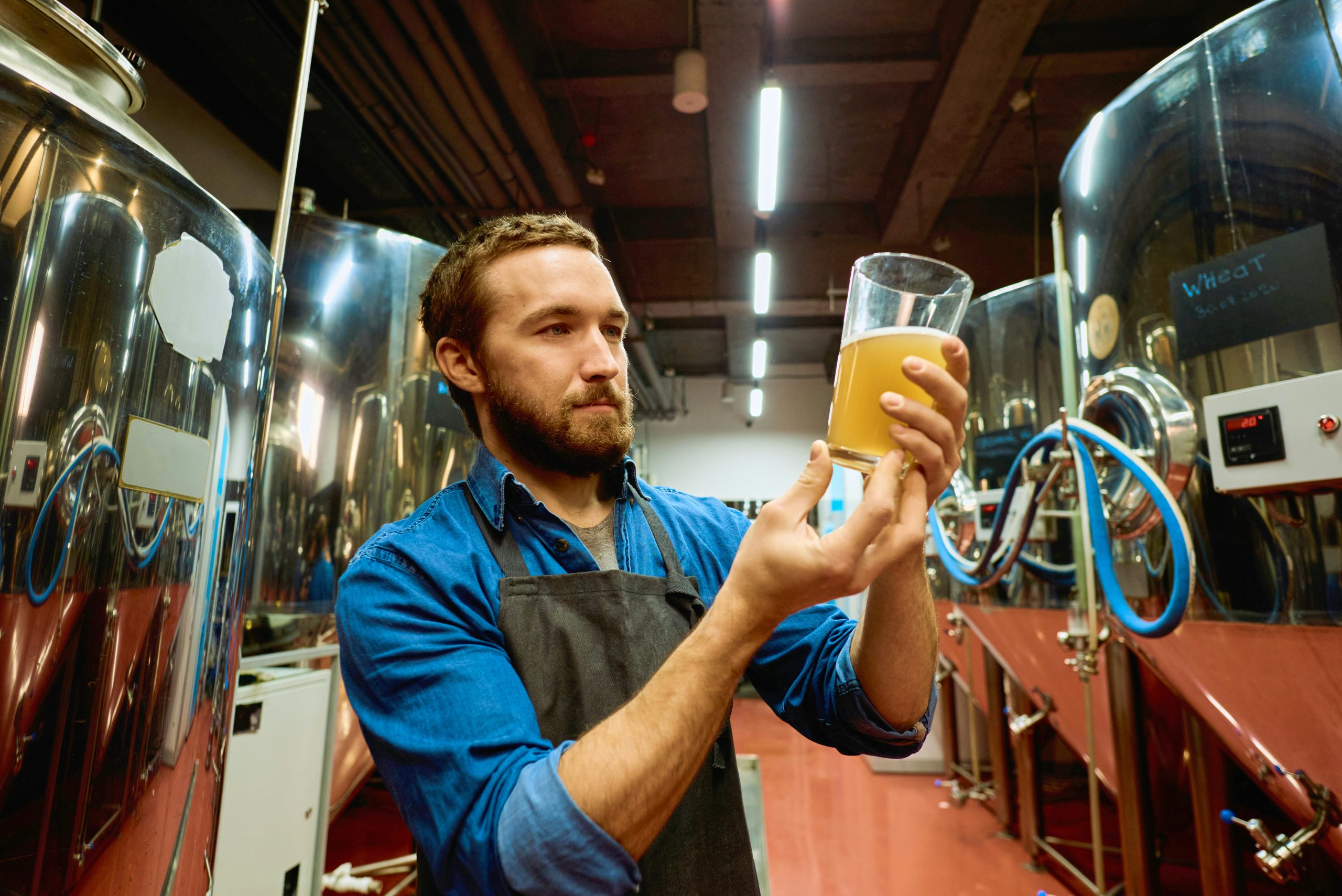
Fermentation is the key to alcohol production in alcoholic beer. Malt, hops, and water alone do not make beer. It is the introduction of brewers' yeast, which kicks off a critical biochemical reaction that converts sugars into alcohol, that turns simple ingredients into beer.
A Simplified Look at the Beer Brewing Process
When grains (malted barley) and hot water are mashed together, the starches in the malt are converted into sugars. This sugary liquid (wort) is separated from the grains, mixed with hops, and boiled. After cooling, the hopped wort is ready for fermentation. When brewer's yeast is added, it feeds on fermentable sugars (glucose, maltose, and maltotriose) and converts them into ethanol (alcohol), carbon dioxide, and flavor molecules. The ethanol produced during fermentation, along with secondary byproducts, contributes to the flavor, aroma and mouthfeel of the final beer. Depending on the specific yeast strain, fermentation time, temperature, and equipment used, brewers can achieve different flavor profiles. To understand how non-alcoholic beer is made, it's first important to understand how alcohol forms in beer in the first place. Here is a quick breakdown of how beer fermentation progresses.
The Three Main Stages of Beer Fermentation
Phase | Duration | What is happening |
|---|---|---|
Primary stage (lag phase) | Up to 15 hours | Yeast interacts with wort and begins breaking down the sugar. Oxygen is depleted, and yeast multiplies. |
Secondary stage (active/exponential phase) | 1 to 4 days | The majority of the sugar is consumed by yeast. Yeast activity slows, and alcohol production begins. |
Third stage (conditioning) | 3 to 10 days | Fermentable sugars have been converted to alcohol. (Remaining unfermentable sugars contribute to the beer's body and flavor.) |
Standard beer fermentation produces an average ABV of 5.0%, with some beer styles, such as Belgian Ales and IPAs, reaching 10% or higher.
What Makes Beer Non-Alcoholic?
Non-alcoholic beer isn't necessarily alcohol-free. To be non-alcoholic, a beer must have less than 0.5% ABV. Different percentages define the labeling on NA beer:
Non-alcoholic: Trace alcohol, under 0.5% ABV
Alcohol-free: Should be 0.0% ABV, but not consistently regulated
0.0% ABV: No detectable alcohol, truly 0.0% ABV
The U.S. Food and Drug Administration (FDA) and the Alcohol and Tobacco Tax and Trade Bureau (TTB) strictly regulate the production, handling, and labeling of non-alcoholic beverages. Using a resource like the NA Beer Finder can help you determine whether your non-alcoholic beer contains alcohol. Brewers producing non-alcoholic beer must ensure that their process for removing or reducing alcohol yields a final product with the correct ABV.
Real-time NA menus.Find NA Drinks Near You


How Alcohol Is Removed From Beer
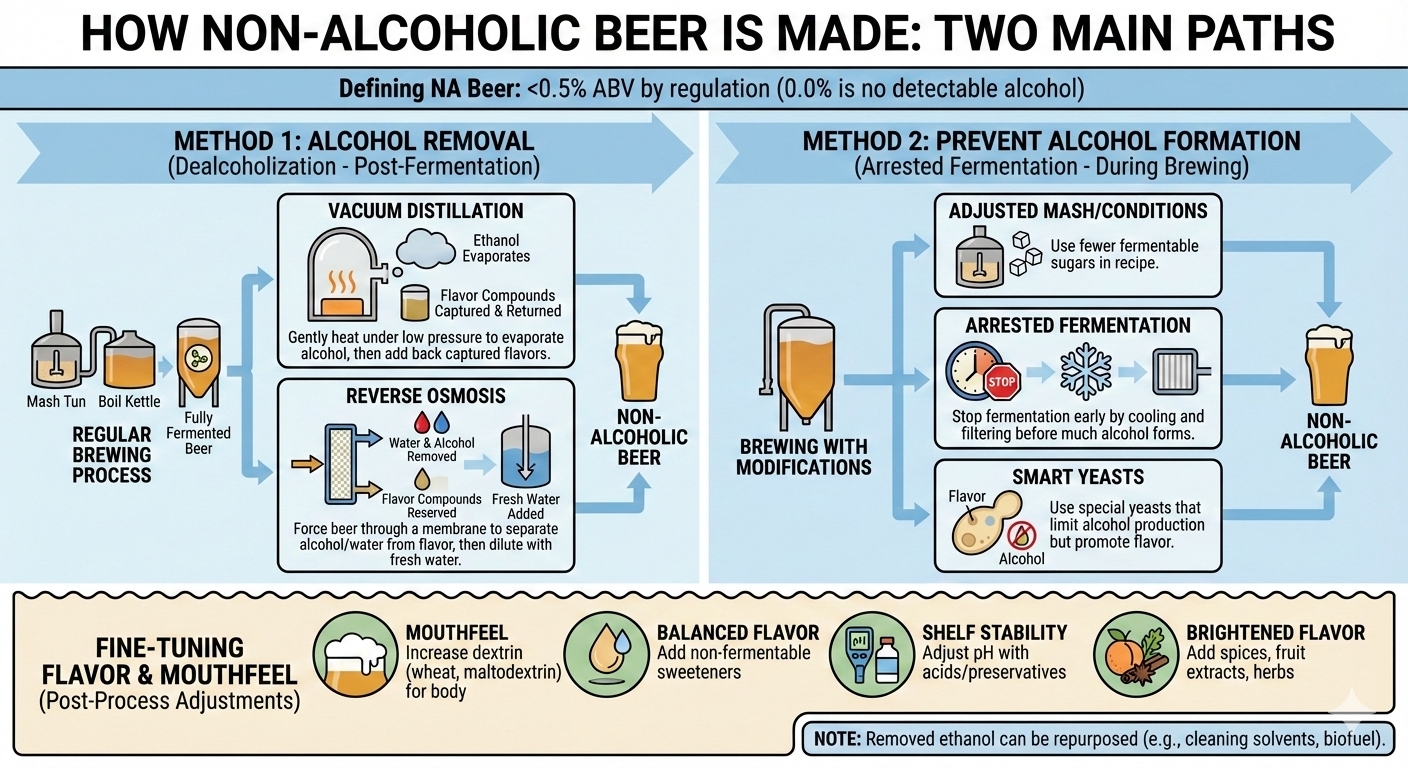
One way of creating a non-alcoholic beer is dealcoholization, or brewing a regular, fully-fermented alcoholic beer, then deconstructing it. Brewers use methods to separate alcohol from beer to reduce or remove ABV.
Vacuum Distillation: Dealcoholization Through Evaporation
Alcoholic beer is gently heated under low pressure to preserve its flavor while allowing ethanol to evaporate and separate from the water in the beer. More modern vacuum distillation methods also capture the flavor compounds lost through evaporation, so they can be added back to the beer after the alcohol is removed.
Reverse Osmosis: Dealcoholization Through a Membrane
Alcoholic beer is forced through a membrane that only water and alcohol can pass through. Clear water and alcohol exit through one pipe, while the flavor compounds are reserved separately. Fresh water is added to the flavor compounds, creating non-alcoholic beer.
How Alcohol Production is Prevented During Brewing
Another way of reducing or removing alcohol content is by restricting its formation in the first place. Brewers of non-alcoholic beer employ one or more methods to limit the yeast's ability to convert sugar into alcohol.
Adjusting Mash Mixture and Conditions
First, a brewer may adjust the recipe for their mash, using fewer fermentable sugars, meaning the yeast has less opportunity to create alcohol to begin with. Using special yeasts can also help limit the biochemical reaction (between yeast and sugar) that creates alcohol.
Arrested Fermentation
Fermentation is allowed to happen for only a short period, then the beer is crash-cooled and filtered. This restricts yeast's activity and significantly reduces alcohol production.
Smart Yeasts for Non-Alcoholic Beer
Yeast experts, like Kevin Verstrepen at KU Leuven's Institute for Beer Research, are working on the next-level techniques for producing non-alcoholic beer. The idea is to develop special yeasts that limit alcohol production while still promoting the creation of flavor compounds. National Geographic reported on the game-changing quest to breed special yeasts for NA beer selectively.
What Happens to the Removed Alcohol?
In many cases, the ethanol produced by dealcoholizing beer is a waste product. But as the popularity of low-alcohol and alcohol-free beer grows, this growing volume of ethanol is finding new uses, such as in cleaning solvents. But there are even more exciting uses on the horizon. Bioenergy International reported the sustainability efforts of a Swedish brewery group, Spendrups, which is investing in a process to store ethanol for use in other products. One day, the brewery hopes to use it as a biofuel to power its process.
Does Alcohol Removal Affect Beer's Taste?
Yes, removing alcohol from beer affects flavor because alcohol and the fermentation process help develop a beer's flavor and body. Alcohol also acts as a carrier for some aromatic compounds in beer, including the flavor notes of spices, fruits, or flowers. When the alcohol is evaporated or filtered out, some of those compounds are lost, too. Dealcoholization removes some of the flavor and body that are present in the original beer. Collected flavor compounds can be added back, but the challenge of creating NA beer is building up or compensating for anything that was lost. While arrested fermentation doesn't remove anything, putting the brakes on fermentation means underdeveloping the flavors and properties that may have been. Brewers know these things, of course, and are prepared from the start to adjust for these effects in the final product. The taste profiles of non-alcoholic beers have become more refined and complex as brewing methods advance and more brewers, large and small, perfect NA beers with the flavor, body, and mouthfeel of regular beer. Wherever you are, you are never far from a great non-alcoholic beer. NA Beer Finder can point you in the right direction.
How Brewers Fine-Tune NA Beer Flavor
There is no shortage of techniques for adjusting for taste in non-alcoholic beer. Beer brewing is a meticulous craft, as much chemistry lab as it is professional kitchen. While we can't cover all the science and technicalities, we can look at some of the basics of how a brewer adjusts the flavor of a final NA beer to achieve desired results.
Enhancement | Common ingredient or technique |
|---|---|
Mouthfeel and foam | Increasing dextrin by adjusting mash process and/or incorporating wheat or maltodextrin (non-fermentable, corn-based sugar) |
Balanced flavor and body | Adding non-fermentable sugar or other sweetener (molasses, turbinado, xylitol, lactose, erythritol, etc.) |
Shelf stability and freshness | Adjusting pH with acids or preservatives (because alcohol acts as a preservative, but it was removed) |
Brightened flavor | Spices, fruit extracts, herbs |
In the early days of non-alcoholic beer, a beer drinker might have noticed a few trade-offs in selecting NA, namely, taste, body, and other characteristics expected of a great beer. But that was the non-alcoholic beer of the past. The surging demand of today's NA brews proves that taste is no longer a compromise, it's one of many of NA's benefits.
Frequently Asked Questions
Does NA beer still have alcohol in it?
Yes, some non-alcoholic beers have trace alcohol by volume (ABV) even after alcohol is removed or reduced. To be classified as non-alcoholic, a beer must have under 0.5% ABV. To be labeled 0.0% ABV, a beer must have no detectable alcohol, truly 0.0%. Checking a beer's label or consulting a resource like the NA Beer Finder can help you determine whether your non-alcoholic beer contains alcohol.
Why do brewers make non-alcoholic beer?
Non-alcoholic beer is in high demand. According to Gallup, more Americans are drinking less as attitudes around alcohol are changing. In that same study, Gallup found that beer is still the most preferred beverage in the U.S. Non-alcoholic beer addresses both sentiments. Further, NielsenIQ reports that 92% of non-alcohol buyers also buy alcoholic beverages. Big brands in particular recognize the power of reaching the NA audience, as well as the crossover consumers who will purchase both non-alcoholic and alcoholic products.
Is NA beer healthier than regular beer?
In many ways, non-alcoholic beer is healthier for you than regular beer. For one, the absence of alcohol is a positive for your body. Because of its super-low ABV, NA beer is processed efficiently by your liver, doesn't cause dehydration (and may actually be hydrating), and virtually never causes intoxication. That being said, whether any food or beverage is healthy for you depends on your own body and your doctor's recommendations.
Can minors or pregnant women drink NA beer?
In most states, minors cannot drink non-alcoholic beer, unless a parent or legal guardian expressly permits it and it's consumed at home. In other words, most establishments won't sell or serve NA beer to a minor. Even non-alcoholic beer can have up to 0.5% ABV, so pregnant mothers considering drinking NA beer during pregnancy should consult with their doctor to determine what is right for them.
Sources
America's Test Kitchen: https://www.americastestkitchen.com/articles/7926-how-is-non-alcoholic-beer-made-ask-paul
Australian Broadcasting Corporation: https://www.abc.net.au/news/2021-10-29/the-lowdown-on-non-alcoholic-beer/100575698
Bioenergy International: https://bioenergyinternational.com/putting-alcohol-from-non-alcoholic-beer-to-good-use/
Cicerone: https://www.cicerone.org/us-en/blog/how-is-beer-made-the-basics
Food Hydrocolloids (Science Direct): https://jib.cibd.org.uk/index.php/jib/article/view/56
Gallup: https://news.gallup.com/poll/693362/drinking-rate-new-low-alcohol-concerns-surge.aspx
How Stuff Works: https://recipes.howstuffworks.com/food-science/brew-non-alcoholic-beer.htm
National Geographic: https://www.nationalgeographic.com/science/article/non-alcoholic-beer-na-yeast-brew
BBC: https://www.bbc.com/reel/video/p0ljxvlq/the-science-behind-brewing-tastier-non-alcoholic-beer
KPU Brewing: https://www.youtube.com/watch?v=jR6sosEiUdw
